
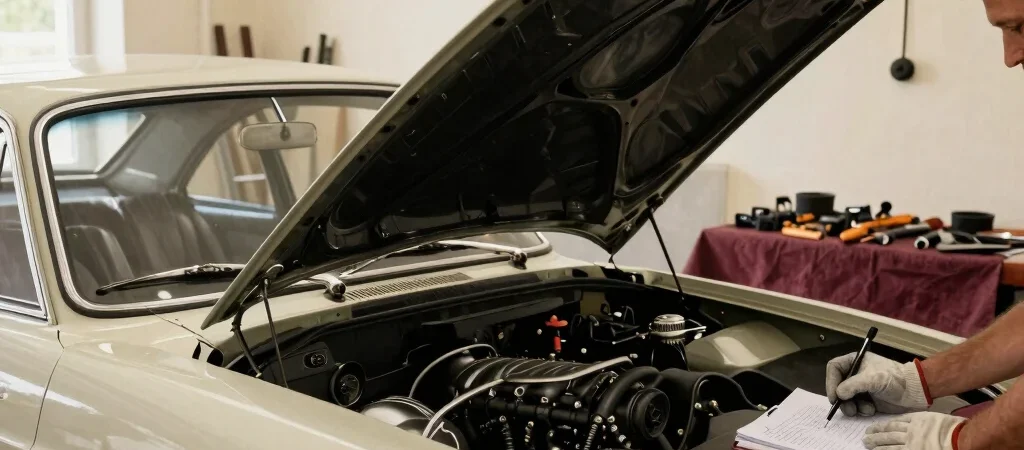
The temptation is familiar: uncover an older car, find the keys, and see whether the engine will run. Resist that first turn. A vehicle that has sat unused can have problems that are invisible from the driver’s seat, and the safest starting point is a record of what is there before anything is disturbed.
Record the car as found
Photograph the body, cabin, engine bay, wheels, and any paperwork before cleaning or dismantling begins. Note identifying numbers and labels exactly as they appear, then compare them with the registration documents and reliable model-specific references. This does not establish a car’s full history, but it gives an owner and specialist a useful, checkable baseline.
Check before trying to start
Long storage can affect fuel, lubricants, cooling components, electrical connections, tyres, and braking systems, with the risks varying by car and storage conditions. Do not assume that a charged battery or a turning engine means the vehicle is safe to drive. Use the manufacturer’s workshop information where available, and ask a qualified mechanic familiar with the model to assess uncertain or safety-critical systems.
Make a staged plan
Separate immediate safety work from cosmetic decisions, and keep a written record of parts, repairs, and unanswered questions. Before buying replacements, confirm the car’s year, version, and the component actually fitted; older vehicles may have been altered during decades of use. A measured inspection is less dramatic than a first start, but it gives the restoration a sounder beginning.