
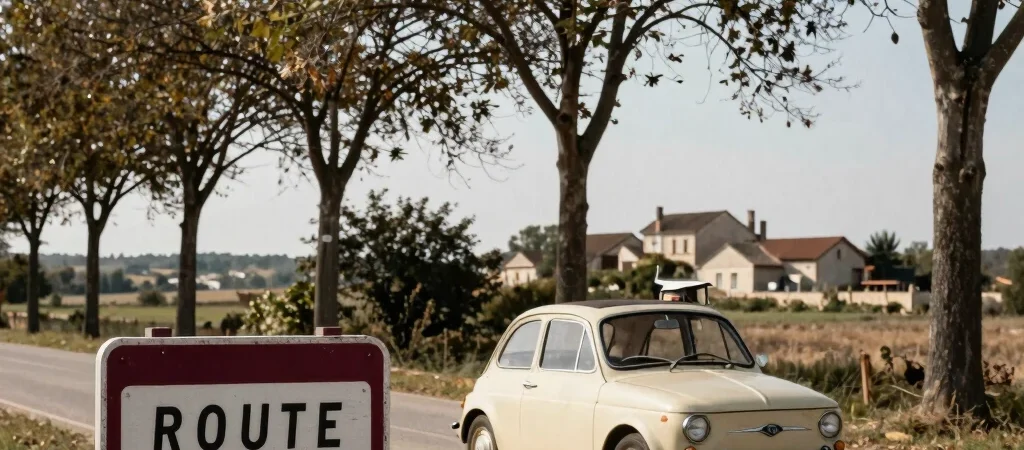
Follow the old N7 south and the journey is made of transitions: the edge of Paris gives way to smaller towns, river crossings, and landscapes shaped by successive roads. The route’s best-known historical sweep connected Paris with Menton, but today’s trip is not simply a matter of following one unchanged ribbon of tarmac. To travel it with care, treat the road as a layered piece of heritage.
A route shaped by travel
For generations of motorists, the N7 served as a major southbound route, linking places that are now often bypassed by faster roads. Town centres, old roadside businesses, and surviving route markers can help make that history visible, though not every familiar stop or sign has remained. The road’s meaning lies as much in these local fragments as in the line on a map.
Plan for changing alignments
Before setting out, compare historical route maps with current road maps and check access, traffic restrictions, and local conditions. The old N7 is not a guarantee of a quiet or continuous scenic drive; modern bypasses and changed road numbering can alter what a visitor encounters. Planning shorter sections allows time to explore a town rather than treating every stop as a quick photograph.
Look beyond the road signs
In places such as Fontainebleau, Nevers, Lyon, and Avignon, the wider setting helps explain how the route connected regions and everyday journeys. Look for local museums, archives, and heritage displays to check what remains and how a particular place fits the N7’s history. The most useful souvenir may be a better understanding of the landscape the road passed through.